Blog & Demos
Tutorials, case studies, benchmarks, and open-source demos — everything you need to build with small language models.
What Small Language Model Is Best for Fine-Tuning
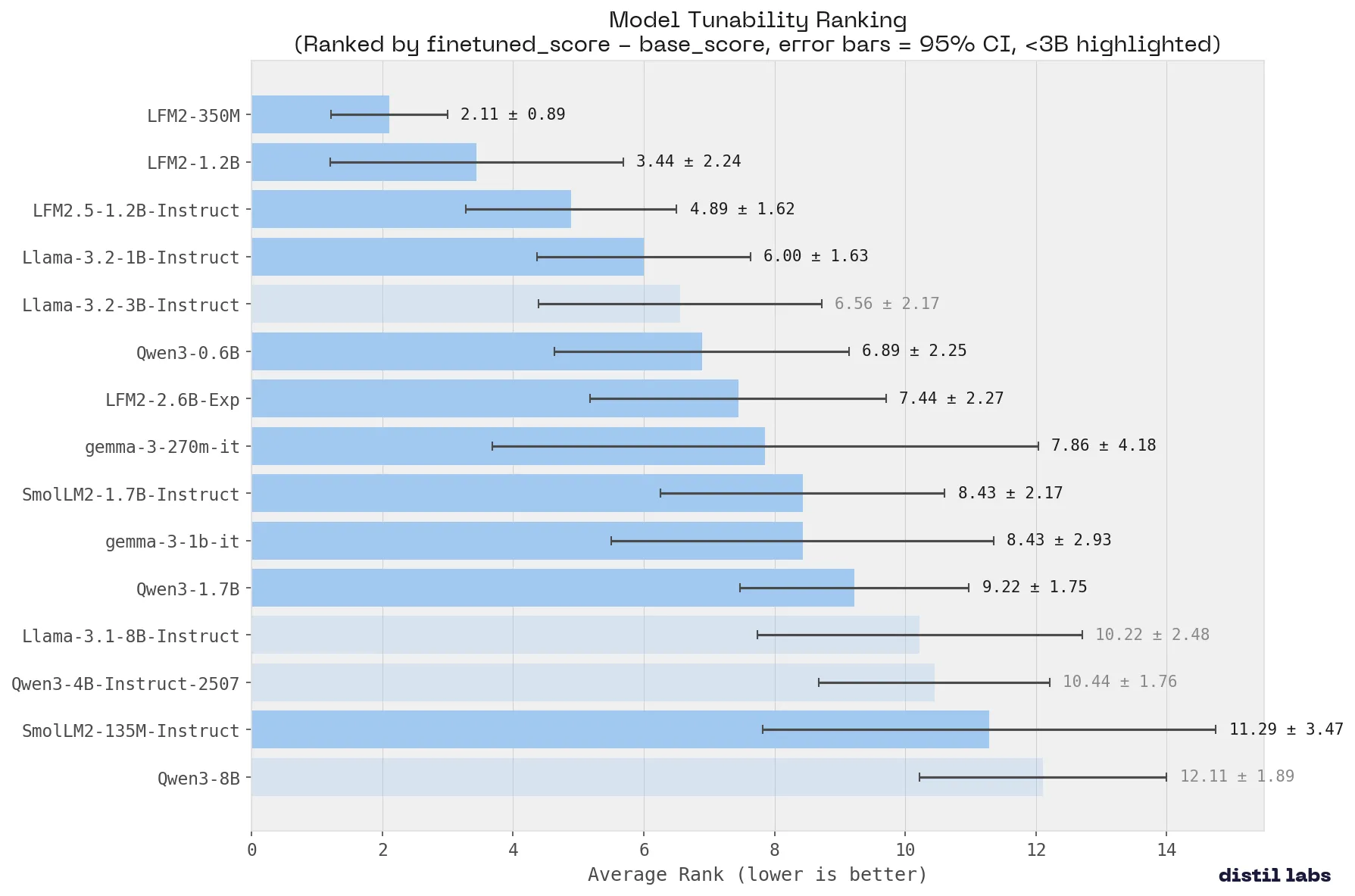
We benchmarked 15 small language models across 9 tasks to find the best base model for fine-tuning. Qwen3-8B ranks #1 overall. Liquid AI's LFM2 family is the most tunable. Fine-tuned Qwen3-4B matches a 120B+ teacher on 8 of 9 benchmarks.
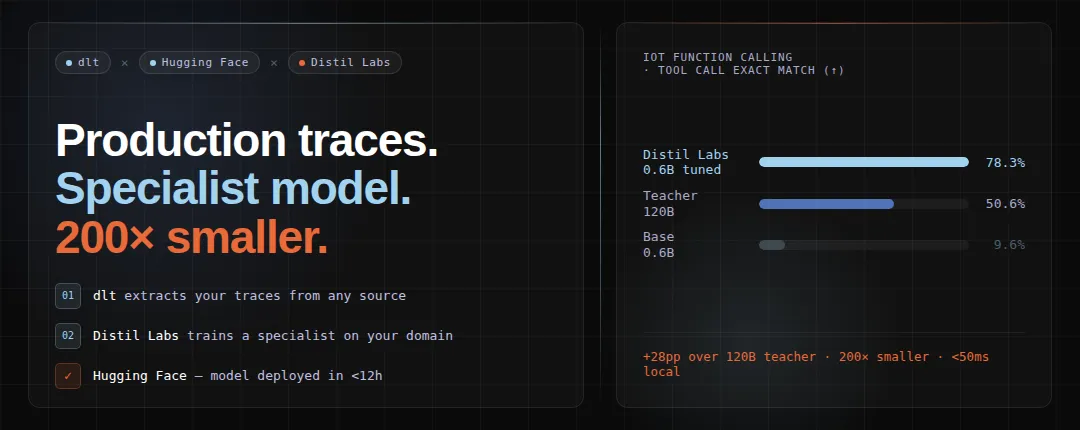
A 0.6B model outperformed a 120B LLM by 29 points - using dlt, distil labs, and Hugging Face
How to turn production LLM traces into a deployed specialist model using dlt for trace extraction and distil labs for training, achieving 79% exact match with a 0.6B model that beats a 120B teacher by 29 points.
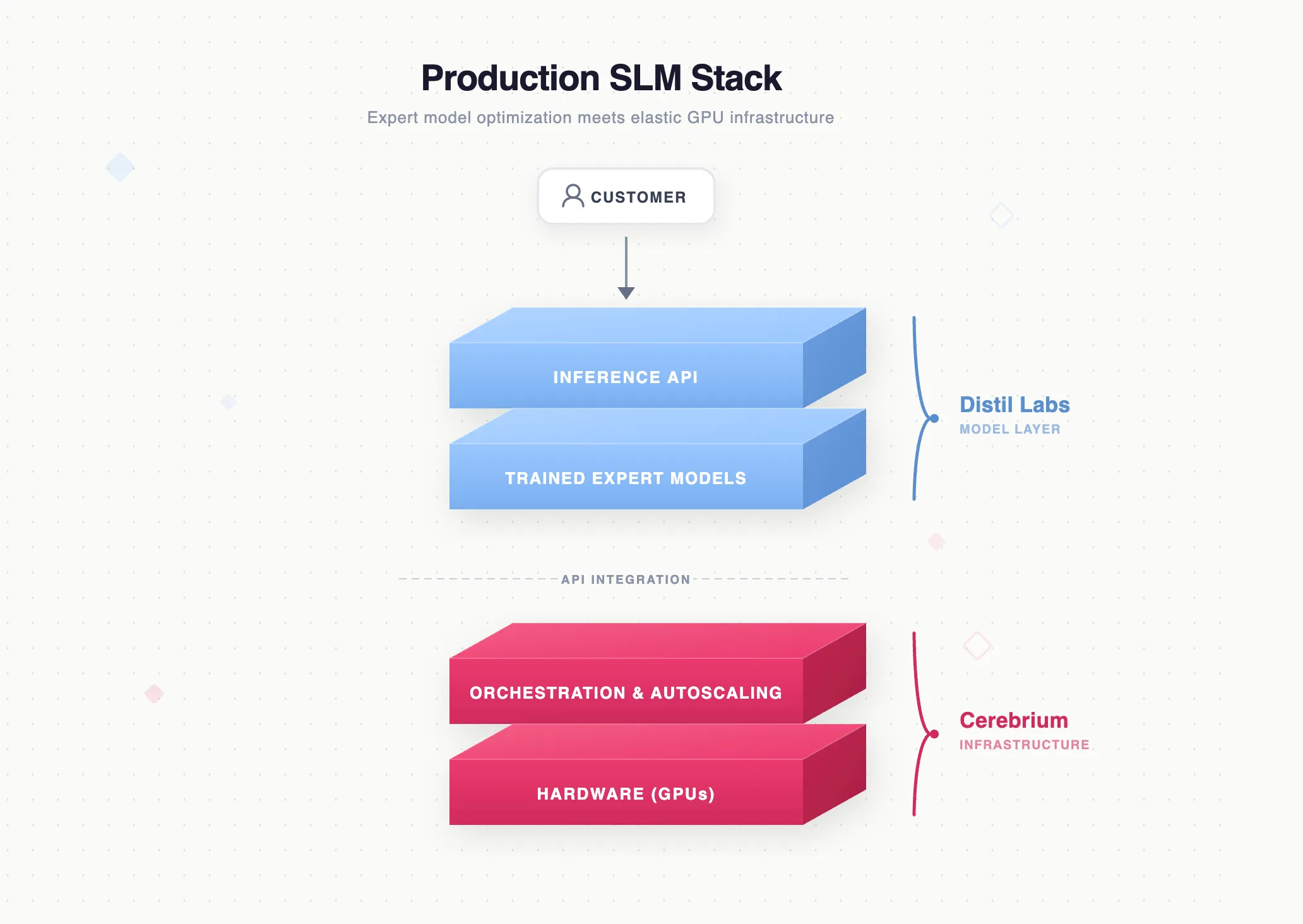
Full-Stack Production Language Models: Expert Model Optimization Meets Scalable GPU Infrastructure
How distil labs and Cerebrium combine expert model optimization with serverless GPU infrastructure to deliver an end-to-end stack for replacing expensive LLM inference with lean, production-grade small-model deployments.
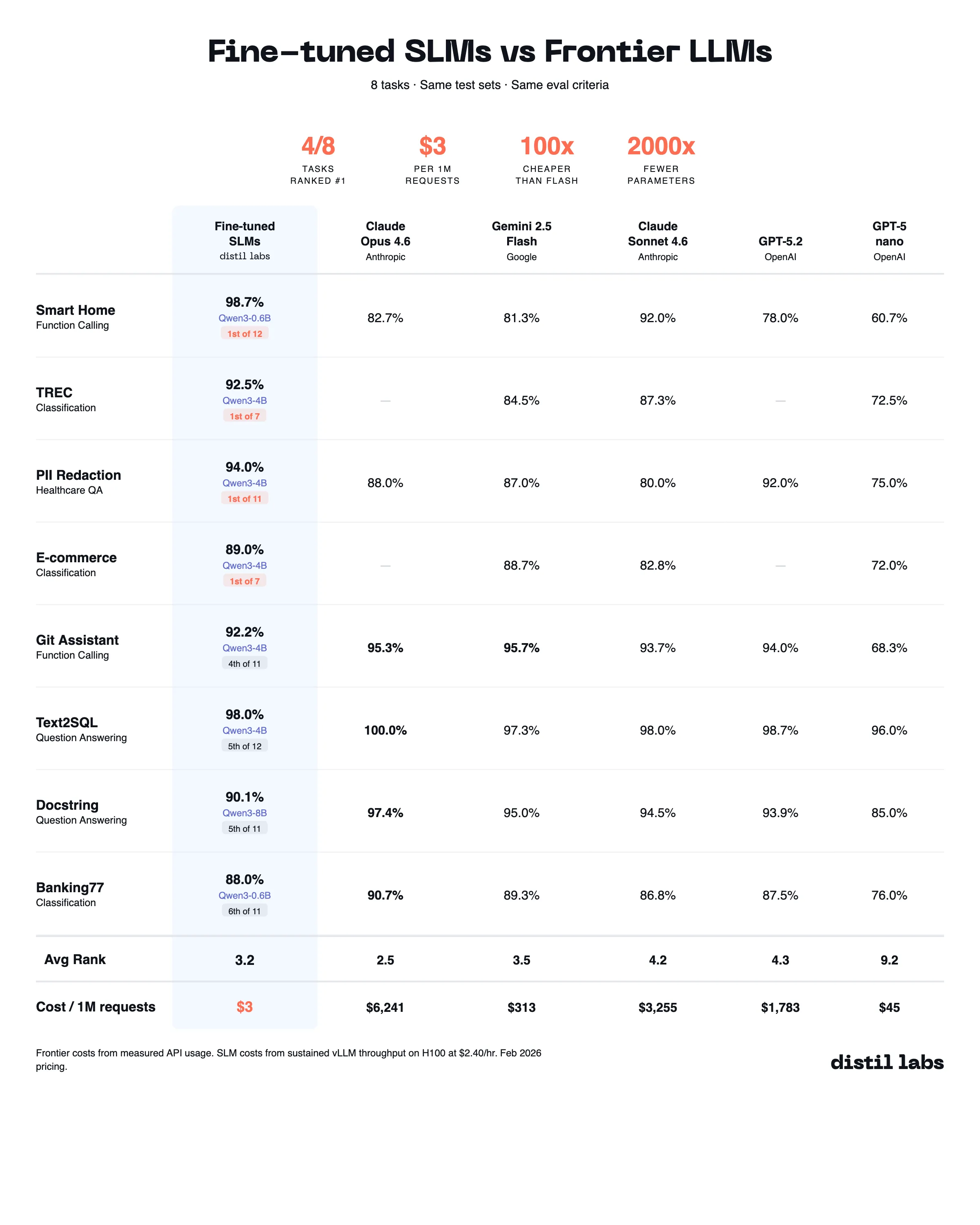
The 10x Inference Tax You Don't Have to Pay
Benchmarking fine-tuned small language models (0.6B-8B) against 10 frontier LLMs across 8 datasets shows that task-specific SLMs match or beat frontier models at 10-100x lower inference cost.
How Knowunity used distil labs to cut their LLM bill by 68%
Knowunity, an edtech startup processing hundreds of millions of AI requests monthly, used distil labs to train a custom small language model that cut inference costs by 68% while improving classification accuracy from 81% to 93%.
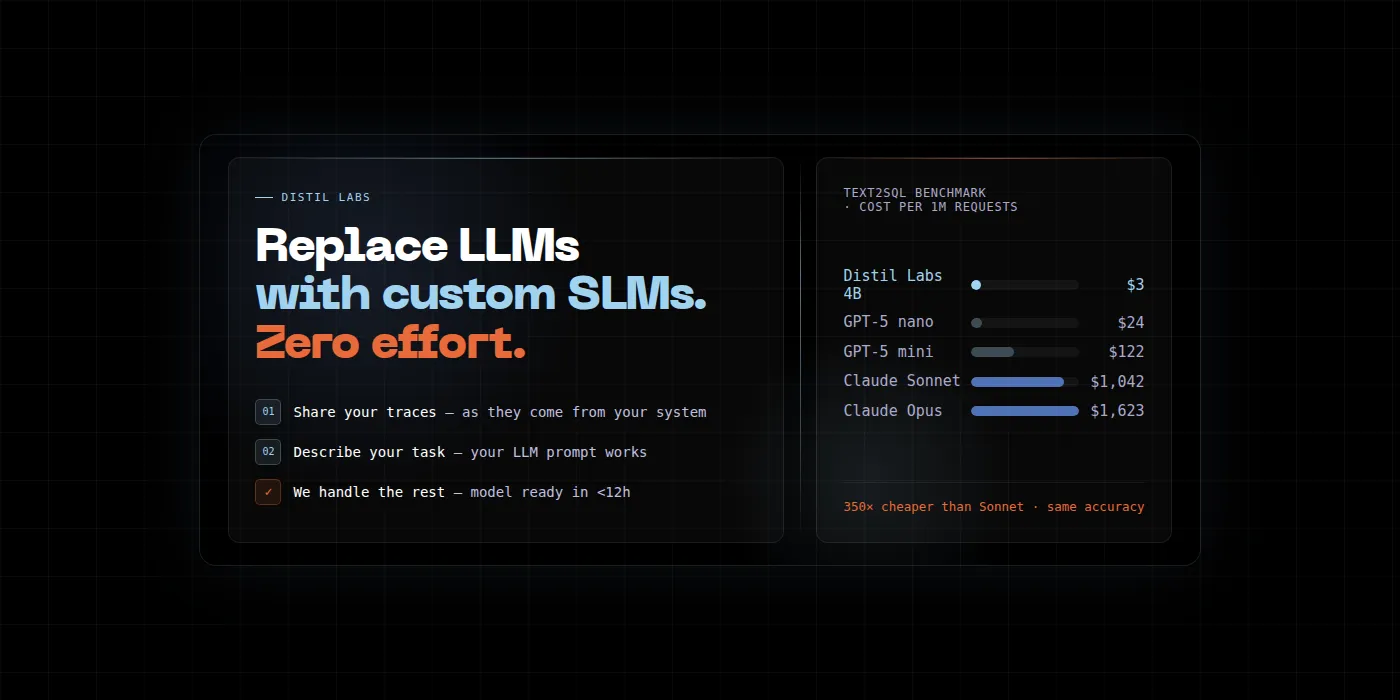
From Production Traces to a Faster, Cheaper, Accurate Model
Learn how to turn your production LLM agent traces into a compact specialist model that outperforms the original, with zero manual annotation and deployment in under 12 hours.
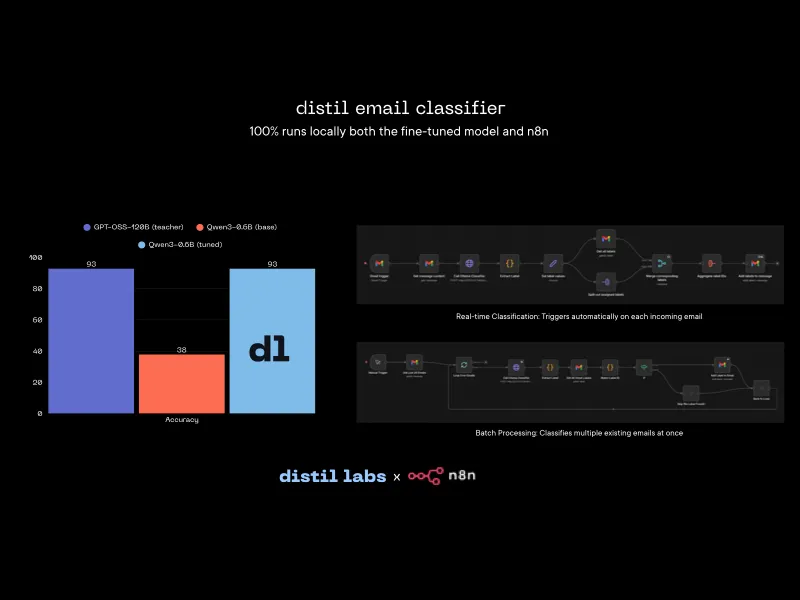
How to label your emails locally with a distil labs fine-tuned model and n8n
Build a fully local Gmail email classification pipeline using a distil labs fine-tuned 0.6B model and n8n, keeping all email data private on your machine.
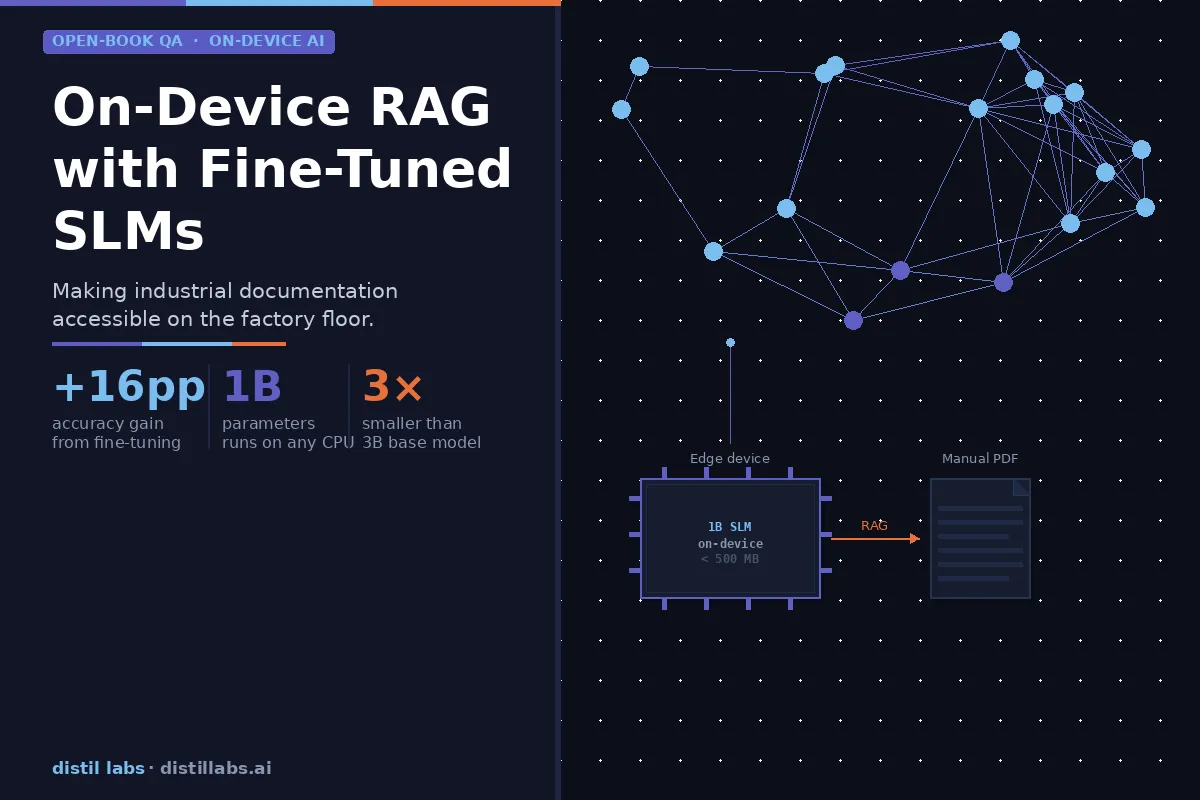
How SLMs Can Enable On-Device RAG - Making Industrial Machinery More Usable
Fine-tuned 1B parameter models can match the accuracy of 3B base models on domain-specific documentation — making on-device RAG viable for industrial equipment without expensive AI-optimized hardware. We tested this on a Siemens PLC manual and achieved a +16 percentage point accuracy gain through distillation.
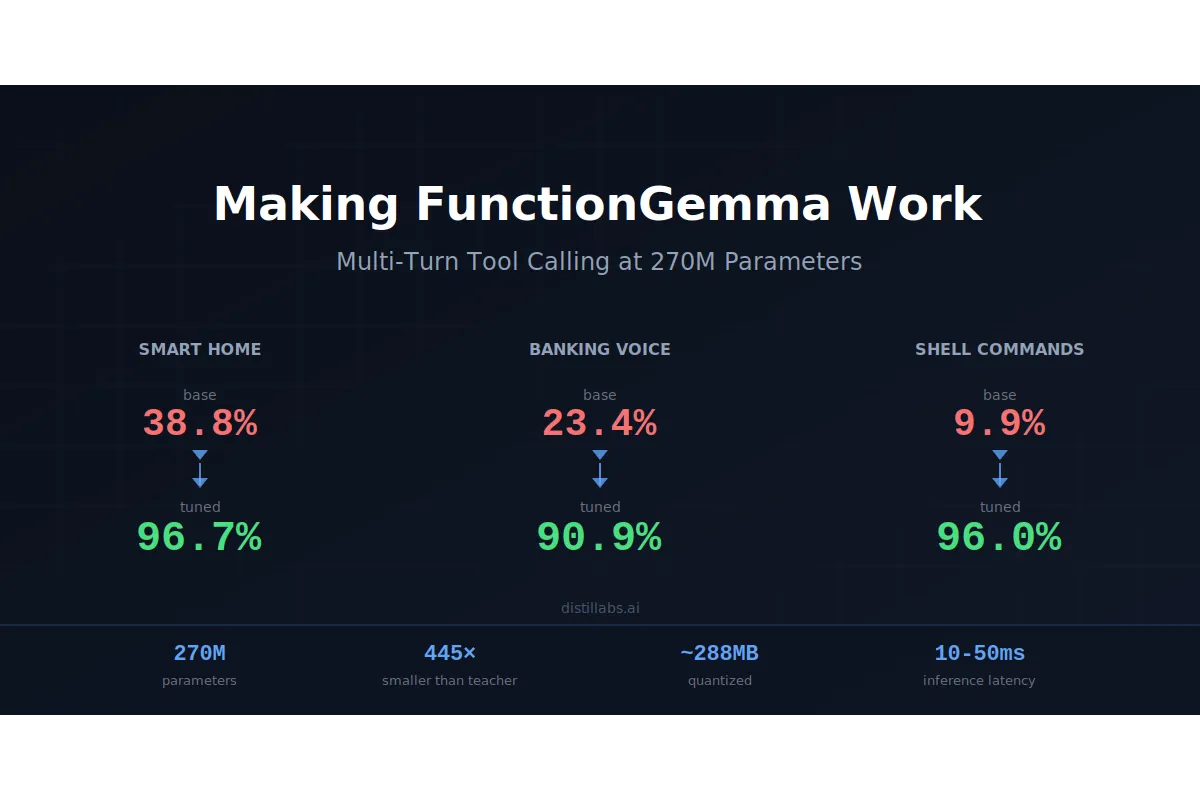
Making FunctionGemma Work: Multi-Turn Tool Calling at 270M Parameters
Google's FunctionGemma scores just 10-39% on multi-turn tool calling out of the box, but after fine-tuning with distil labs it reaches 90-97% accuracy across three benchmarks, matching or exceeding a 120B teacher model at 270M parameters.